
 By Admin
There’s something reassuring about filling a glass straight from the kitchen tap and knowing the water is right for your household. But if you’ve ever noticed white marks around your faucets, an unpleasant chlorine smell, or a strange taste in your drinking water, you know that not every water supply feels the same.
Water quality varies from one home to another. Some households struggle with hard water that leaves stubborn deposits on bathroom fixtures, while others want to reduce chlorine taste or address specific contaminants identified through testing. The good news is that several water treatment options are available. The challenge is figuring out which one makes sense for your home without spending money on equipment you don’t actually need.
Understanding how different systems work is a sensible place to begin.
Start by Understanding What’s in Your Water
Before buying a filter or water treatment unit, take a closer look at your water supply. Municipal water generally undergoes treatment and monitoring, but its characteristics can still vary depending on the source, distribution system, and plumbing inside your home. Private wells have their own concerns, including naturally occurring minerals and possible contamination from nearby activities.
Taste and appearance can provide useful clues, but they don’t tell the whole story. Water that looks perfectly clear may contain contaminants that can’t be detected without testing. On the other hand, white deposits on taps often point to mineral hardness rather than a serious safety problem.
A water quality report from your local supplier can offer a helpful starting point. If you use a private well, arrange appropriate testing through a qualified laboratory. Depending on the results, you may need to address hardness, sediment, microorganisms, dissolved substances, or another specific concern.
This step matters because treatment systems are designed for different purposes. Choosing equipment before understanding the problem is a bit like buying medicine without knowing what’s wrong.
Whole-House Filtration for Everyday Water Use
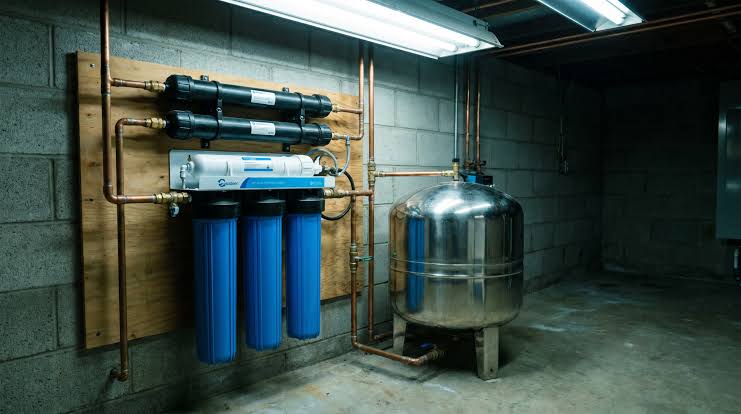
Imagine turning on the shower, running the washing machine, and filling a kitchen pot, all using water treated by a single system. That’s the basic appeal of whole house water filters. Installed where water enters the property, these systems treat water supplied to multiple fixtures rather than just one tap.
Depending on the filter design and media used, a whole-house system may reduce sediment, chlorine, or certain other substances. Some specialized systems are designed for particular contaminants, but their effectiveness depends on the specific model and its tested performance.
For example, a sediment filter can capture particles that might otherwise accumulate in plumbing fixtures or interfere with downstream equipment. A suitable activated carbon system may improve chlorine-related taste and odor throughout the home.
However, whole-house filtration isn’t automatically the best answer for every water problem. A standard sediment or carbon filter won’t necessarily remove dissolved salts, soften hard water, or make microbiologically unsafe water safe to drink. Those jobs may require different treatment methods.
Before installing one, consider your household’s water consumption, the available installation space, and the filter’s rated flow capacity. A unit that’s too small for the home’s demand may restrict water pressure when several taps are running. Also check replacement cartridge costs, because ongoing maintenance is part of the real purchase price.
Dealing With Hard Water and Mineral Buildup
Hard water is a common frustration for homeowners. It contains elevated levels of dissolved calcium and magnesium, which can leave chalky deposits on showerheads, glassware, taps, and appliances. Soap may also lather less readily, and mineral buildup can become troublesome over time.
This is where water softeners can be useful. Conventional ion-exchange softeners replace calcium and magnesium ions with sodium or potassium ions, reducing the hardness that causes scale formation.
The difference can be noticeable in everyday life. Shower screens may be easier to clean, and washing machines or water heaters may experience less scale accumulation. Depending on the original water hardness and household habits, some people also find that soap and detergent perform better.
Still, a softener isn’t a universal water purifier. It doesn’t automatically remove bacteria, pesticides, or every other unwanted substance. If the water has additional quality concerns, separate treatment may be necessary.
Salt-based softeners also need periodic replenishment and produce regeneration wastewater. People who need to limit sodium intake should consider the system’s effect on drinking water and discuss suitable options with a qualified professional. In some situations, a separate drinking-water tap or a different softening technology may be appropriate.
It’s worth testing water hardness before purchasing equipment. If mineral levels are already low, a softener may offer little practical benefit.
Reverse Osmosis for Drinking and Cooking
Sometimes the main concern isn’t every tap in the house. It’s the water used for drinking, preparing meals, and making tea or coffee. In that case, a dedicated drinking-water treatment system may be a more practical choice.
Reverse osmosis drinking water systems use pressure to move water through a semipermeable membrane, reducing many dissolved substances. Depending on the system, additional filtration stages may help reduce sediment, chlorine, and other targeted contaminants.
Reverse osmosis can be useful when testing identifies substances that the selected system is certified to reduce. Certain systems can reduce dissolved salts, lead, arsenic, and other contaminants, but performance varies. Always check the certification and contaminant-specific claims rather than relying on a broad promise that the water will be completely pure.
These systems are commonly installed beneath a kitchen sink and supply a separate drinking-water faucet. That arrangement allows households to treat water for drinking and cooking without filtering every gallon used for bathing, cleaning, or laundry.
There are trade-offs, naturally. Many conventional systems discharge some water during treatment, require periodic filter and membrane replacement, and may need storage space beneath the sink. Water production can also be slower than using an ordinary tap.
Some systems include a remineralization stage to adjust taste after treatment. Whether that’s useful depends on personal preference and the system’s design.
Can You Combine Different Treatment Methods?
Yes, and in some homes, combining technologies makes more sense than relying on one system to do everything.
A household with very hard water and a specific drinking-water contaminant might use a softener for scale control and a properly selected reverse osmosis unit at the kitchen sink. Another home might need only sediment filtration because its water testing shows that suspended particles are the main issue.
The order of treatment matters, too. Sediment filtration may protect downstream equipment, while other treatment stages address particular chemical or microbial concerns. The right arrangement depends on the water analysis, equipment specifications, and installation requirements.
Avoid adding unnecessary stages simply because a system has a longer list of features. More components mean more maintenance, and every stage should have a clear purpose.
Maintenance Is Part of the Investment
Even a well-designed water treatment system needs regular attention. Filters eventually become exhausted, membranes lose performance, and softeners require appropriate regeneration and servicing.
Follow the manufacturer’s replacement schedule and keep a record of service dates. If water quality changes noticeably, don’t assume that replacing a cartridge will solve the problem. Retesting may be necessary, particularly if the original concern involved a health-related contaminant.
Professional installation can also help prevent leaks, pressure problems, and incorrect connections. For systems intended to reduce specific contaminants, periodic water testing may help confirm that treatment continues to work as expected.
Find the Solution That Fits Your Home
Choosing a water treatment system doesn’t have to be complicated. Start with reliable water quality information, identify the problems that genuinely need attention, and compare systems based on their verified capabilities and ongoing costs.
Whole-house filtration, water softening, and reverse osmosis each serve a different purpose. One may be enough, or a combination may be appropriate. The best choice isn’t necessarily the most expensive unit or the one with the most stages. It’s the system that addresses your water’s actual characteristics and fits your household’s needs.
A little research now can save unnecessary expense later. More importantly, it helps you make confident decisions about something your family relies on every single day